We Are Not Enemies, But Friends: Learning to Listen in Our Community
Even if DEI wasn’t the problem, the board majority still voted to cut teachers and student programs. Why didn’t you push back?
The School Board eliminated the Equity and Inclusion Resolution so tax dollars go to education, not ideology. If that money is back in the classrooms, why do we need a levy?
Is the money from Question 1 actually going to fund classrooms?

What will the district do with this money if the referendums pass? What happens if they fail?
If many of these issues were created at the state level, shouldn’t the state fix them?
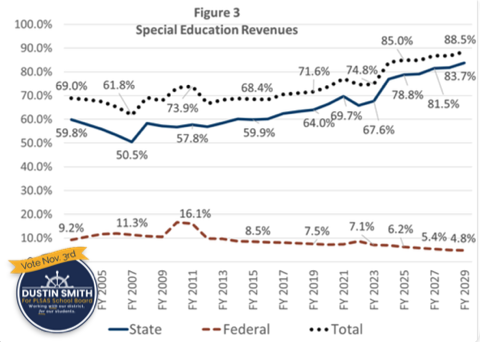
What’s the special education cross-subsidy?

How did the district not see these financial hardships coming?

DEI in Action: Making Sure Every Student Can Participate
Recently I took part in the Lakers for Love candidate forum, where we were asked what diversity, equity, and inclusion (DEI) mean to us and what role they should play in supporting all PLSAS students.
These terms are about as loaded as a baked potato, but I appreciated the question. Divisive as they may be right now, it's still important to identify what is actually happening when we use them. A small campaign blog probably won't change many minds, but explaining my perspective and how it shapes my decisions is part of the job.
For me, DEI equals access. All of us want to be part of our communities, whether that's a city, neighborhood, school, church, workplace, or sporting event. Sometimes the people draw us in, and sometimes it's the space itself. Either way, what makes these places special is the chance to connect with others and share experiences.
Unfortunately, the same things that make these places wonderful can also make them unwelcoming. That happens for many reasons, but I want to focus on one: access. Access shows up in schools in plenty of ways, but one example is especially easy to understand, and it exists right here in our district.

The PLSEA Argument: You Can Say It Again, It Still Doesn’t Make It True
Previously on Smith for School Board…
I recently shared that I was endorsed by the PLSEA for the 2026 campaign and discussed the accusations that such an endorsement was a conflict of interest (it’s not). My argument was simple: you can’t be anti-union, but pro-teacher. In making my argument, I went through each claim from candidate Rick Storlie, weighed the evidence behind it, and showed where the claims were either false, or misleading.
A conclusion is only as good as the information you used to support it. This information must be judged dispassionately, and if the data doesn’t hold up, the conclusion doesn’t either. This is not something that exists only within the decision making process itself. The process starts all over again when new information becomes available later. Does this new information agree with what you established before, or are the original findings weakened under further scrutiny?
It is because of this process that I am returning to the discussion about the PLSEA for another blog post. Since my original post, two things have happened; Storlie repeated a claim about the board's authority that didn't hold up the first time he made it, and the distinction I drew between supporting teachers and questioning their union, has been challenged.